




What is a headless CMS and why is it relevant in 2025?
A headless CMS (Content Management System) is a backend-based content management solution that acts as a content repository and delivers content via APIs to any frontend. In contrast to traditional CMS systems, where the backend and frontend are tightly integrated, a headless CMS separates the content management from the presentation layer. This gives businesses increased flexibility to distribute content across channels and devices.
Why has headless CMS become so popular?
In 2025, content will be delivered seamlessly across websites, mobile applications, IoT devices and digital screens. With a headless CMS you get:
- Omnichannel delivery: Publishing content to all digital channels from one central system.
- Development flexibility: Ability to choose the best front-end technology, such as React, Vue or Angular, without being locked into a specific interface.
- Scalability: The systems are designed to handle growth and can be adapted as business needs change.
- Future-proofing: A solution that can be easily integrated with new technologies and distribution channels.
- Performance: Possibility of static page generation and optimization of content delivery for faster websites and better user experience.
In-depth study of headless CMS in 2025
The evolution of the CMS solution
The CMS market has evolved from:
- Traditional CMS: Solutions such as WordPress, Drupal and Joomla, which combine content management and presentation.
- Hybrid CMS: Solutions that offer both traditional and headless functionality, so you can choose your approach per project.
- Headless CMS: Focuses exclusively on content management via APIs for increased flexibility.
The advantages of headless CMS
When developing a website in 2025, a headless CMS can provide several advantages:
- Technological freedom: Ability to use modern front-end frameworks without being tied to a particular presentation solution.
- Improved security: By separating content management from presentation, the potential attack surface is reduced.
- Faster time-to-market: Parallel development of frontend and backend can shorten the launch time.
- Increased performance: Possibility of static page generation and implementation of JAMstack strategies.
- Future-proofing: Easy integration with new digital channels.
Challenges when using headless CMS
Along with the benefits, there are some challenges:
- Increased demand for technical expertise: Implementation and maintenance can be more demanding.
- Higher initial costs: The transition from a traditional CMS to a headless solution can lead to increased development costs.
- Limited WYSIWYG editing: Content creators may find the visual editing experience less intuitive.
- Integration complexity: Making APIs and front-end technologies work seamlessly can require additional effort.
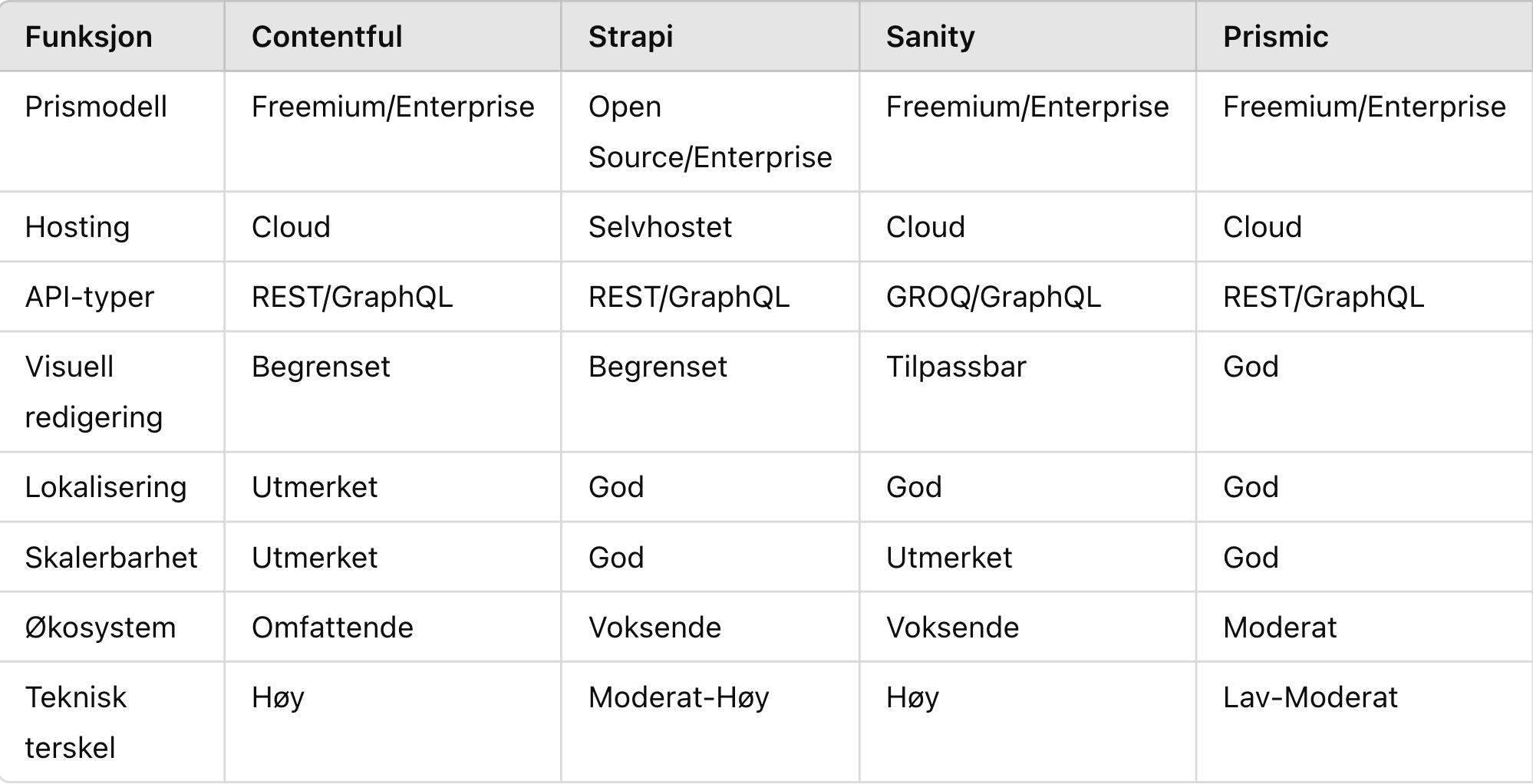
Comparison of leading headless CMS systems in 2025
Below is an overview of five popular headless CMS solutions, with a brief description of their key features, advantages and disadvantages:
1. Contentful
- Overview: Aimed at larger projects with complex content needs and an enterprise focus.
- Key features: Robust API-first architecture, advanced content modeling and support for multilingualism.
- Pros: Good performance, extensive documentation and a rich ecosystem.
- Disadvantages: High price and a technically complex system that may be oversized for smaller projects.
2. Strapi
- Overview: An open-source alternative that can be self-hosted, giving full control over data and security.
- Key features: Customizable admin panel, support for both RESTful API and GraphQL, and user management.
- Advantages: No license costs, high degree of customization and an active developer community.
- Cons: Requires more technical maintenance, and has fewer enterprise features than commercial alternatives.
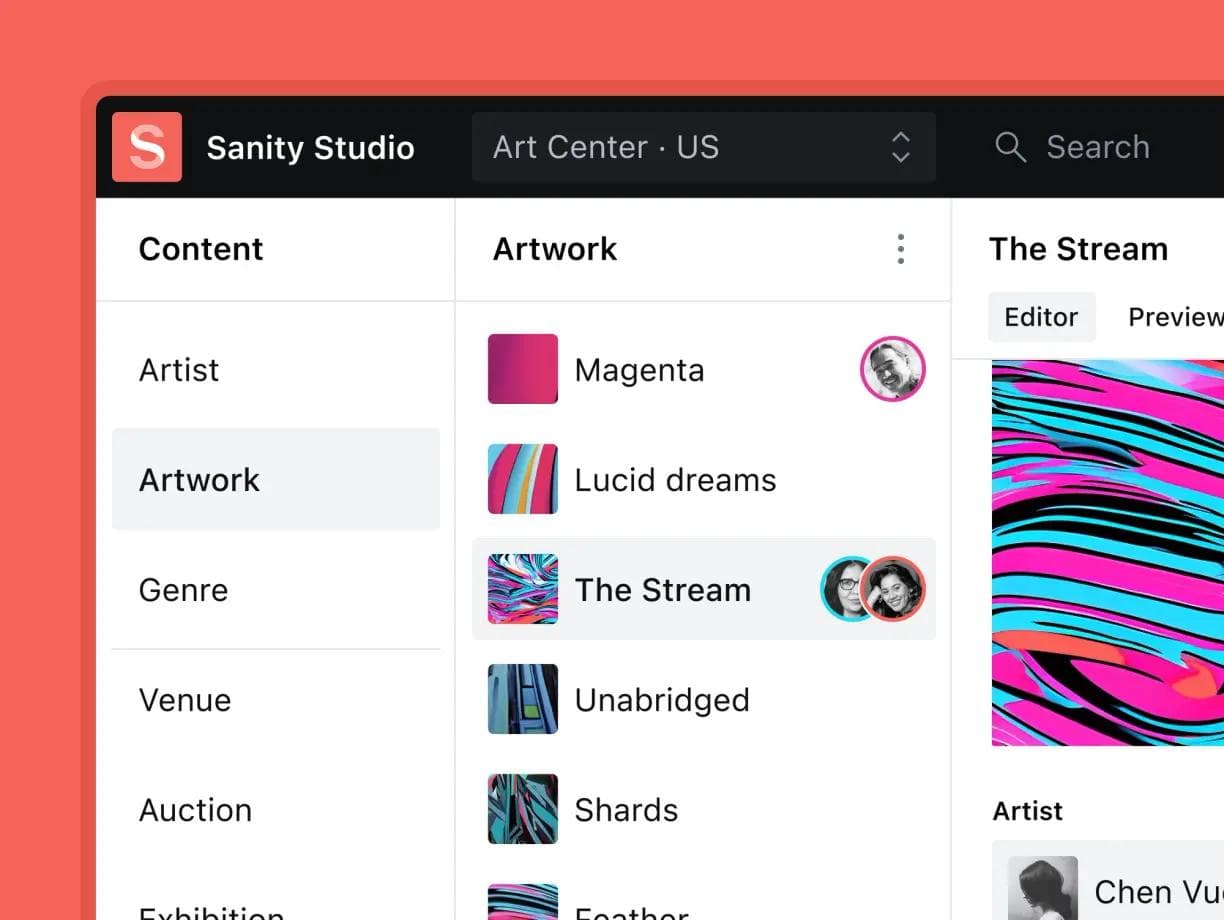
3. Sanity
- Overview: Provides a flexible editing interface with a focus on structured content data.
- Key features: Customizable editing environment with Sanity Studio, real-time collaboration and advanced image processing.
- Advantages: High flexibility and the possibility of real-time collaboration.
- Cons: Has a steeper learning curve for content creators, and requires training in their own query language.
Sanity is the CMS we at Ur Solutions use the most ourselves, and we offer Sanity development for clients who choose this platform.
4. Prismic
- Overview: Focuses on ease of use for both developers and content creators with a modular approach.
- Key Features: Slice Machine for component-based content modeling and real-time previewing.
- Advantages: Quick start-up and easy implementation, with an intuitive editing experience.
- Cons: Limited customization of the admin interface and fewer advanced features for complex needs.
5. Storyblok
- Overview: Combines headless CMS with a visual editing experience, making it easy to use for teams with both technical and non-technical members.
- Key features: Visual editing with live preview, support for nested components and advanced workflow.
- Advantages: Excellent for internationalization and provides a good balance between flexibility and ease of use.
- Disadvantages: Can be expensive for larger projects, and has somewhat limited API functionality compared to pure API-first solutions.
Comparison
Technical aspects of implementing headless CMS
When developing a website with a headless CMS, there are several technical considerations:
API strategies and performance
- REST API: Easy to understand, but can result in over-fetching of data.
- GraphQL: Allows the client to specify exactly what data is needed, reducing unnecessary data volume.
- GROQ: Sanity uses its own query language to combine flexibility with robust performance.
For optimal performance, caching strategies, use of CDNs, and techniques such as static page generation should be considered.
Integration possibilities
A headless CMS can be easily integrated with other systems, such as:
- E-commerce platforms
- Marketing tools
- Analysis tool
- Search engines and search functions
- Payment solutions
- CRM systems
Security considerations
Some important security measures include:
- API security with robust authentication and authorization.
- Correct configuration of CORS.
- Implementation of rate-limiting to protect against DDoS attacks.
- Creation of workflows for content approval before publication.
Frontend technologies
The choice of front-end technology is essential to make optimal use of a headless CMS. Examples of popular frameworks include:
- React and Next.js: For dynamic websites with support for both static generation and server-side rendering.
- Vue and Nuxt.js: Provides an intuitive development environment with powerful tools.
- Svelte and SvelteKit: For highly optimized websites with less overall JavaScript.
- Angular: Suitable for larger enterprise applications.
- Astro: Focuses on minimizing the amount of JavaScript delivered to the client.
Conclusion
Choosing the right headless CMS is a strategic decision with long-term consequences. In 2025, headless architecture offers a solution that provides flexibility, scalability and efficient content delivery, regardless of which frontend technology you choose.
In summary:
- Headless CMS separates content management from presentation, allowing for omnichannel delivery.
- Different systems have specific advantages, with some better suited for enterprise needs, while others are ideal for projects with simpler requirements.
- Technical aspects such as API strategies, integration options and security are critical for a successful implementation.
- The choice of front-end technology should be adapted to the project's needs for performance and development flexibility.
This guide provides an overview of the leading headless CMS solutions and important technical considerations, so that you can choose a solution that best supports your company's future digital strategy.


